

Page, Katie
Associate Professor of Medicine and Pediatrics
The Brain Regulation of Appetite, Nutrition, Cognition, & Health (BRANCH) Lab has two major research programs: (i) Neuroendocrine regulation of appetite & glucose homeostasis (ii) Maternal-fetal programming of metabolism. Our translational research program addresses questions from a broad perspective by combining a number of disciplines (neuroscience, physiology, nutrition, psychology) and novel techniques to understand neural mechanisms of metabolic diseases.


Petzinger, Giselle
Associate Professor of Neurology (Clinical Scholar)
Dr. Giselle M. Petzinger is a Movement Disorders Specialist and neuroscientist in the department of neurology at USC Keck School of Medicine. Her training includes MD at USC, Neurology Residency at Yale, Fellowship at Columbia University and experimental therapeutics at the Parkinson’s Institute in the bay area. Her research involves animal models and clinical studies to investigate lifestyle on cognitive/motor function and synaptic plasticity in frontal-striatal and cerebellum circuits. Other studies include investigating the relationship between motor performance and cognitive function and related circuitry in PD and the role of compensation using behavioral, neuroimaging and neurophysiologic metrics. Her work also focuses on understanding neuro-energetic mechanisms of synaptic plasticity in PD focused on mitochondrial function and L-Lactate.
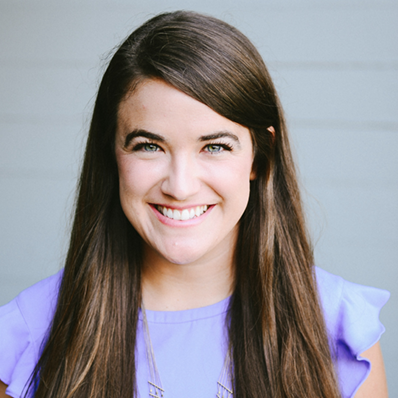
Schwartzman, Jessica
Assistant Professor of Clinical Pediatrics
The Training and Research to Empower NeuroDiversity (TREND) Lab uses multi-method approaches, including electroencephalogram (EEG), behavioral observation and clinical interviews to study risk and protective factors for depression, suicide, and other mental health outcomes in youth with autism and other neurodivergent conditions. We also partner with autistic and other neurodivergent people to adapt and design treatments for the individual and family. The TREND Lab focuses on characterizing and treating adverse mental health outcomes in youth with autism and other neurodivergent conditions.
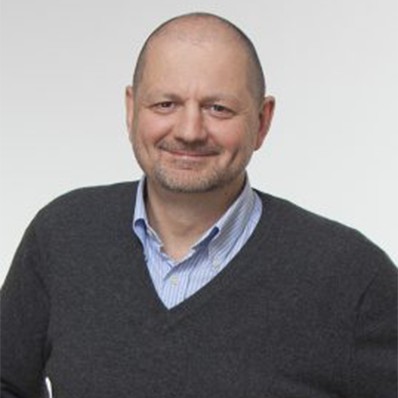
Schweighofer, Nicolas
Professor of Biokinesiology and Physical Therapy
Nicolas Schweighofer is a professor of biokinesiology and physical therapy and holds joint appointments in computer science, biomedical engineering and neuroscience at USC. He is also the director of the Center for Statistics and Computation in Biokinesiology. He co-founded computational neurorehabilitation, an emerging field at the intersection of neurorehabilitation, computational neuroscience, motor control and learning, and artificial intelligence (AI). The overarching goals of computational neurorehabilitation are to understand and to further improve motor recovery following neurologic injury by mathematically modeling and simulating the neural processes underlying the change in behavior due to rehabilitation. In his current research, he is investigating how predictive models of recovery, informed by the neuroscience of stroke recovery and motor learning, as well as large datasets, can provide the basis for AI methods that suggest timing, dosage and content of rehabilitation. Such an approach will transform neurorehabilitation by guiding clinicians, patients and healthcare providers in the optimization of treatments via precision rehabilitation.
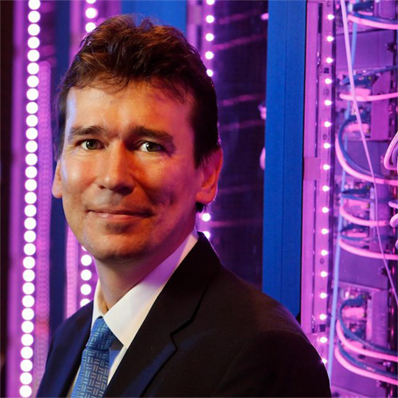
Thompson, Paul
Paul Thompson is a Professor in the Keck School of Medicine of USC. His team’s research projects focus on the neuroscience, mathematics, computer science, software engineering and clinical aspects of neuroimaging and brain mapping. Honored with the 2023 Pioneer in Medicine Award of the Society of Brain Mapping and Therapeutics, and the U.S. Alzheimer Association’s Zenith Award, Paul Thompson directs the ENIGMA Consortium, a global alliance of 2500 scientists in 47 countries who conduct the largest studies of 30 major brain diseases – ranging from Parkinson’s disease, anorexia, schizophrenia, depression, ADHD, bipolar illness and OCD, to HIV and addictions and their effects in the brain. ENIGMA’s genomic screens of over 70,000 people’s brain scans and genome-wide data (published in Nature Genetics, 2012; Nature, 2015; Science, 2020) have brought together experts from 300 institutions to unearth over 500 genetic variants that affect brain structure, disease risk, and brain connectivity. At USC, Dr. Thompson is a Professor of Neurology, Psychiatry, Radiology, Pediatrics, Engineering, and Ophthalmology, and Director of the ENIGMA Center for Worldwide Medicine, Imaging & Genomics – a $11M NIH Center of Excellence in Big Data Computing. Using worldwide medication screens, ENIGMA discovers factors that affect progression of Alzheimer’s disease and other dementias, schizophrenia, depression and childhood brain disorders. Dr. Thompson also directs AI4AD – an $18M NIH Initiative on AI methods to accelerate Alzheimer’s disease research, discovering novel treatment targets; he directs the India ENIGMA Initiative – large-scale study of brain aging in India. He directs the USC Imaging Genetics Center – a group of 50 scientists in Marina del Rey. His team created the first maps of Alzheimer’s disease and schizophrenia spreading in the living brain, and a method to track brain growth in children. Dr. Thompson has an M.A. in mathematics and Greek and Latin Languages from Oxford University, and a PhD in neuroscience from UCLA.
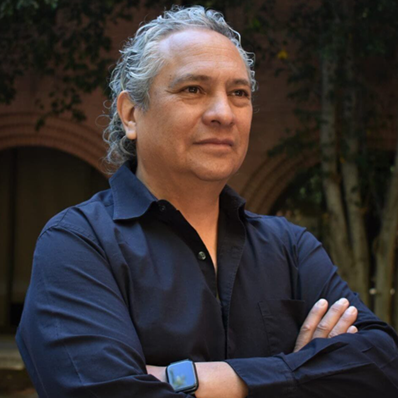
Valero-Cuevas, Fransisco
Our laboratory is dedicated to understanding the biomechanics, neuromuscular control, and clinical rehabilitation of human mobility, with an emphasis on translation to robotics and Artificial Intelligence. Towards this end, we employ a synergy of experimental and theoretical techniques. Our diverse experimental arsenal ranges from physiological recordings, computational models, machine learning, and neuromorphic computing. These procedures in turn inform theoretical work and devices to restore sensorimotor function for rehabilitation, and create neuro-inspired robots, circuits, and algorithms.