

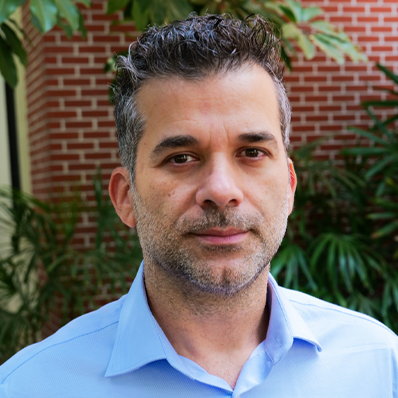
Christopoulos, Vasileios
Assistant Professor of Biomedical Engineering
Prof. Christopoulos' research focuses on understanding the neural mechanisms underlying higher-order cognitive functions, such as decision-making, motor learning, and motor control. In recent years, he has expanded his research to include clinical studies on patients with brain and spinal cord injuries. His work encompasses intracortical Brain-Machine Interface research in individuals with tetraplegia and the use of functional ultrasound imaging in patients undergoing surgery for brain and spinal cord disorders. His innovative research aims to bridge the gap between basic neuroscience and clinical applications, contributing to advancements in neurotechnology and neurorehabilitation.


Song, Dong
Associate Professor of Neurological Surgery and of Biomedical Engineering
Dr. Dong Song is an Associate Professor of Neurological Surgery and Biomedical Engineering and Director of the Neural Modeling and Interface Laboratory at the University of Southern California (USC). Dr. Song received his B.S. degree in Biophysics from the University of Science and Technology of China in 1994 and his Ph.D. degree in Biomedical Engineering from USC in 2004. His research aims to develop biomimetic devices that can be used to treat neurological disorders. Specifically, his group uses a combined experimental and computational strategy to (1) understand how brain regions such as the hippocampus perform cognitive functions, (2) develop next-generation modeling and neural interface methodologies to investigate brain functions during naturalistic behaviors, and (3) build cortical prostheses that can restore and enhance cognitive functions lost in diseases or injuries. He received the James H. Zumberge Individual Award at USC in 2008, the Outstanding Paper Award of IEEE Transactions on Neural Systems and Rehabilitation Engineering in 2013, and the Society for Brain Mapping and Therapeutics Young Investigator Award in 2018. Dr. Song has published over 190 peer-reviewed journal articles, book chapters, and conference papers. He is a member of the Biomedical Engineering Society, IEEE, Society for Neuroscience, and National Academy of Inventors. Dr. Song’s research has been supported by DARPA, NSF, and NIH.