

Monterosso, John
Associate Professor of Psychology
Our lab is primarily focused on decision-making, especially in the context of addiction and obesity. We use self-report, behavior, and fMRI. Our lab is currently (through 2028) participating in USC’s Tobacco Center of Regulatory Science (supported by NIH & FDA).

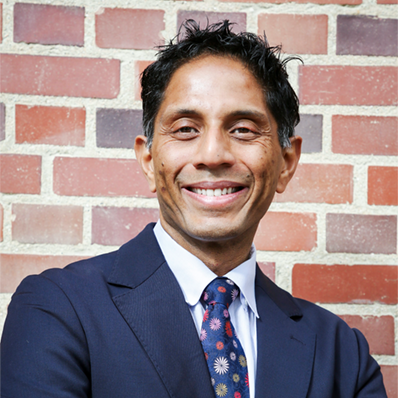

Rouhani, Nina
Assistant Professor of Psychology
The Interactive Cognition Lab uses an interdisciplinary framework, drawing from computational neuroscience, cognitive science and psychology, to uncover how learning and memory processes guide individual and interactive behavior in the laboratory and real world.
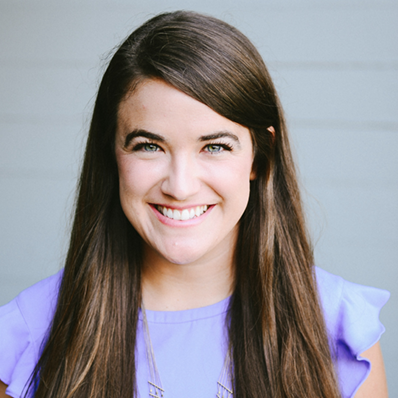
Schwartzman, Jessica
Assistant Professor of Clinical Pediatrics
The Training and Research to Empower NeuroDiversity (TREND) Lab uses multi-method approaches, including electroencephalogram (EEG), behavioral observation and clinical interviews to study risk and protective factors for depression, suicide, and other mental health outcomes in youth with autism and other neurodivergent conditions. We also partner with autistic and other neurodivergent people to adapt and design treatments for the individual and family. The TREND Lab focuses on characterizing and treating adverse mental health outcomes in youth with autism and other neurodivergent conditions.


Tao, Huizhong W.
Professor of Physiology and Neuroscience
My lab studies how the mouse brain processes visual information and transforms it into behavior. Our research focuses on identifying the neural circuits involved in visual perception and how these circuits drive visually guided actions. We use a combination of techniques—including electrophysiology to record neural activity, microendoscopic calcium imaging to monitor populations of neurons in freely moving animals, and both optogenetics and chemogenetics to precisely manipulate specific circuit components. By integrating these approaches, we aim to understand how visual signals are encoded, transmitted, and used to guide behavior at the level of individual neurons and larger networks.