

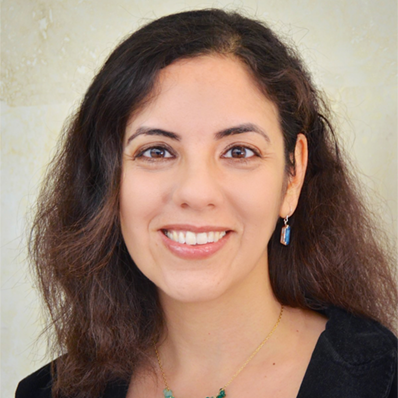
Aziz-Zadeh, Lisa
Associate Professor of Occupational Science, Psychology and Neurology
The Center for the Neuroscience of Embodied CognitionWe explore how rudimentary sensory-motor areas may be intrinsically involved in processing aspects of higher cognition such as language, thought, emotions, empathy, and social communication. We study both typical populations and autism, using MRI and behavioral studies, also integrating microbiome research.


Baker, Laura A.
Gene-environment interplay in human behavior, including personality, cognitive and social development. Rich datasets from longitudinal twin study of risk factors for externalizing behavior problems available for analysis.


Cardenas-Iniguez, Carlos
Carlos Cardenas-Iniguez (pronouns he/him/his) is the Director of the Context, Complexity, and Impact (CCI) Lab, where his research focuses on using large-cohort datasets, such as the ABCD Study, to explore how social stratification shapes the environments in which people live and, in turn, how these environments affect neural and cognitive development and mental health. Dr. Cardenas-Iniguez is also involved with the Geospatial Hub of the Network for Exposomics in the US (NEXUS) Coordinating Center, where he leads efforts to develop consensus-based metadata standards for environmental exposures in human exposome research. His broader work emphasizes integrating environmental and social responsibility into neuroscience and psychology, including applying critical methodologies to illuminate the role of systemic forces in shaping developmental outcomes.


Goldsworthy, Ray
Clinical Associate Professor of Otolaryngology and Biomedical Engineering
Ray's research combines psychoacoustics, signal processing, and auditory rehabilitation towards improving hearing for the hearing impaired with emphasis on cochlear implant technology. Ray's research examines relationships between fundamental limits of auditory resolution with speech recognition. This line of research provides a foundation for quantifying auditory capacity, and sets the stage for systematically exploring signal processing solutions to enhance hearing for the impaired. Ray's signal processing research focuses on strategies that are inspired by the dynamic processes observed in healthy hearing. These strategies range from spatial beamformers modeled after binaural hearing to cochlear implant stimulation strategies inspired by auditory nerve physiology. Combining psychoacoustics and signal processing ultimately requires careful attention to auditory rehabilitation since cochlear implant and hearing aid users generally require dedicated time and training to learn how to use new information provided by enhanced signal processing solutions.

Immordino-Yang, Mary Helen
Professor of Education, Psychology & Neuroscience
Professor Mary Helen Immordino-Yang is the Director of USC CANDLE (Center for Affective Neuroscience, Development, Learning and Education). CANDLE’s mission is to bring developmental affective neuroscience into partnership with educational innovation, and to use what is learned to guide the transformation of schools, policy, and the student and teacher experience for a healthier and more equitable society. Our research involves analyzing multi-modal data, including functional and structural neuroimaging (MRI, EEG), and psychophysiological data, from mixed-method studies of adolescent development and effective teaching. During the 2025-2026 academic year, CANDLE will be designing, developing stimuli and collecting data for an upcoming longitudinal study of adolescents’ brain and psychosocial development.