
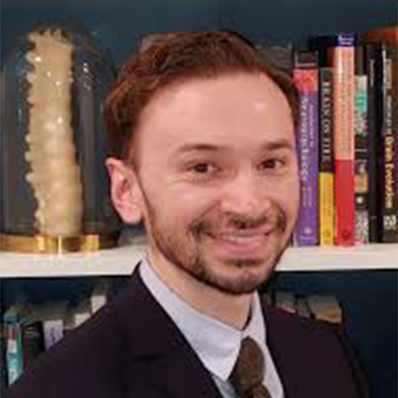
Valadez, Emilio
Assistant Professor of Psychology
Our lab focuses on understanding how early risk factors, such as temperament and early adversity, confer risk for future emotional problems among children and adolescents. More specifically, we are interested in how executive functions (assessed with a combination of behavioral, EEG, and MRI measures) moderate the psychiatric impact of early-life risk factors. Three interrelated questions spanning basic and translational work guide our research: 1) How are executive functions supported by the brain? 2) How do early risk factors alter the development of executive functions? 3) How do executive functions interact with early risk to modulate psychiatric outcomes? Ultimately, our work aims to better understand basic cognitive and developmental processes to identify novel target mechanisms for intervention.

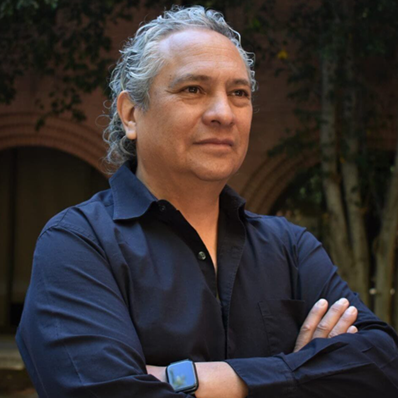
Valero-Cuevas, Fransisco
Our laboratory is dedicated to understanding the biomechanics, neuromuscular control, and clinical rehabilitation of human mobility, with an emphasis on translation to robotics and Artificial Intelligence. Towards this end, we employ a synergy of experimental and theoretical techniques. Our diverse experimental arsenal ranges from physiological recordings, computational models, machine learning, and neuromorphic computing. These procedures in turn inform theoretical work and devices to restore sensorimotor function for rehabilitation, and create neuro-inspired robots, circuits, and algorithms.

Zhang, Li
Professor of Physiology and Neuroscience
As systems neuroscientists, we aim to decipher brain circuits to understand how perception and behavior arise, how the brain adapts to a dynamic environment, and how circuit dysfunction contributes to neurological and psychiatric disorders. We focus on resolving neural architecture—the wiring of neurons that underlies brain function. Technical innovation is central to our approach. We have developed molecular, genetic, electrophysiological, and imaging tools to study circuits supporting both local computation and behavior. Our research integrates in vivo and in vitro electrophysiology, two-photon calcium imaging, neural modeling, anatomical tracing, and optogenetics to build a comprehensive understanding of cell-type-specific circuit mechanisms.