

Schwartzman, Jessica
Assistant Professor of Clinical Pediatrics
The Training and Research to Empower NeuroDiversity (TREND) Lab uses multi-method approaches, including electroencephalogram (EEG), behavioral observation and clinical interviews to study risk and protective factors for depression, suicide, and other mental health outcomes in youth with autism and other neurodivergent conditions. We also partner with autistic and other neurodivergent people to adapt and design treatments for the individual and family. The TREND Lab focuses on characterizing and treating adverse mental health outcomes in youth with autism and other neurodivergent conditions.

Schweighofer, Nicolas
Professor of Biokinesiology and Physical Therapy
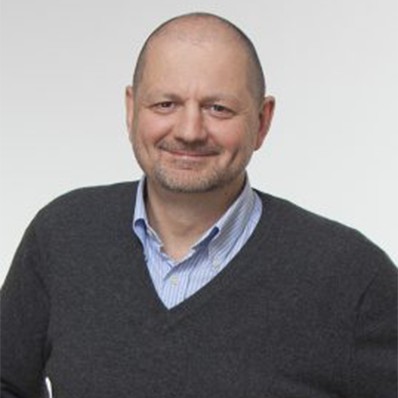
Nicolas Schweighofer is a professor of biokinesiology and physical therapy and holds joint appointments in computer science, biomedical engineering and neuroscience at USC. He is also the director of the Center for Statistics and Computation in Biokinesiology. He co-founded computational neurorehabilitation, an emerging field at the intersection of neurorehabilitation, computational neuroscience, motor control and learning, and artificial intelligence (AI). The overarching goals of computational neurorehabilitation are to understand and to further improve motor recovery following neurologic injury by mathematically modeling and simulating the neural processes underlying the change in behavior due to rehabilitation. In his current research, he is investigating how predictive models of recovery, informed by the neuroscience of stroke recovery and motor learning, as well as large datasets, can provide the basis for AI methods that suggest timing, dosage and content of rehabilitation. Such an approach will transform neurorehabilitation by guiding clinicians, patients and healthcare providers in the optimization of treatments via precision rehabilitation.

Shera, Christopher
Professor of Otolaryngology-Head and Neck Surgery
The peripheral auditory system transforms air-borne pressure waves into neural impulses that are interpreted by the brain as sound and speech. The cochlea of the inner ear is a snail-shaped electro-hydromechanical signal amplifier, frequency analyzer, and transducer with an astounding constellation of performance characteristics, including sensitivity to sub-atomic displacements with microsecond mechanical response times; wideband operation spanning three orders-of magnitude in frequency; and an input dynamic range of 120 dB, corresponding to a million-million-fold change in signal energy. All of this is achieved not with the latest silicon technology but by self-maintaining biological tissue, most of which is salty water. How does the ear do it? To address this question, we exploit the ear's curious ability to make sound while listening to sound.


Tao, Huizhong W.
Professor of Physiology and Neuroscience
My lab studies how the mouse brain processes visual information and transforms it into behavior. Our research focuses on identifying the neural circuits involved in visual perception and how these circuits drive visually guided actions. We use a combination of techniques—including electrophysiology to record neural activity, microendoscopic calcium imaging to monitor populations of neurons in freely moving animals, and both optogenetics and chemogenetics to precisely manipulate specific circuit components. By integrating these approaches, we aim to understand how visual signals are encoded, transmitted, and used to guide behavior at the level of individual neurons and larger networks.