

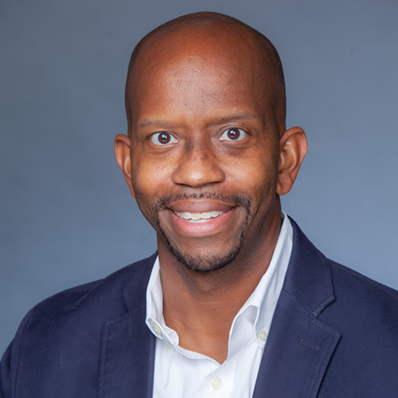
Finley, James
Associate Professor of Biokinesiology and Physical Therapy
In the USC Locomotor Control Lab, we seek to understand how walking is controlled and adapted in both the healthy and injured neuromuscular systems. We develop models and experiments based on principles of neuroscience, biomechanics, engineering, and exercise physiology to identify the factors that guide locomotor learning and rehabilitation. Ultimately, the goal of our work is to design novel and effective interventions to improve walking ability in individuals with damage to the nervous system.

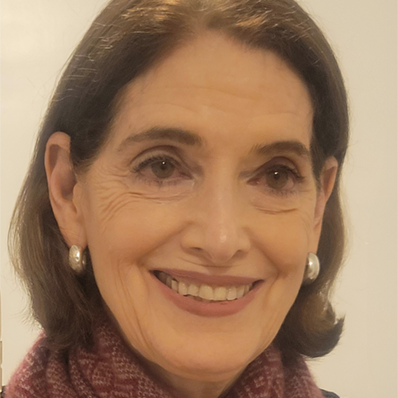
Hirsch, Judith A.
Gabilan Distinguished Professorship in Science and Engineering and Professor of Biological Sciences
Our laboratory studies the thalamus, the interface between neocortex and the sensory periphery. Thalamus was once regarded as a simple gatekeeper, passively relaying information during waking and shielding neocortex from disturbance during sleep, but this is an impoverished view. We explore how thalamus, itself, contributes to sensory integration. In particular, we study the structure of neural circuits in the visual part of thalamus, how these operate during vision and how they extract and recode information from the eye. Our work shows how thalamus might contribute to visual processing by, for example, sharpening the visual image and increasing the efficiency of the neural code. Because circuits in different parts of thalamus are similar, our work pertains to thalamic function in general.


Itti, Laurent
Professor of Computer Science and Psychology
The main fundamental research focus of the lab is in using computational modeling to gain insight into biological brain function. Thus, we study biologically-plausible brain models, and we compare the predictions of model simulations to empirical measurements from living systems. The brain subsystem towards which most of our efforts are focused is the visual system. Our modeling efforts range from fairly detailed models of small neuronal circuits, such as a single hypercolumn of orientation-selective neurons in primary visual cortex, to large-scale models embodying several million highly-simplified neurons to explore mechanisms of visual attention, gaze control, object recognition, and goal-oriented scene understanding. Further, we strive to employ modeling principles which are mathematically optimal in some task- and goal-dependent sense. Thus, we are interested in investigating the tasks and conditions for which the biological brain approaches the theoretical limits of information processing.
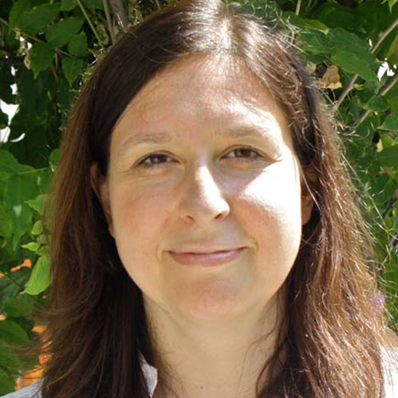
Lepore, Natasha
Associate Professor of Research Radiology
My lab, the Computational Imaging of Brain Organization Research Group (CIBORG), focuses on developing advanced numerical methods to study brain anatomy and function using magnetic resonance imaging. Our work aims to deepen understanding of typical and atypical brain development, across both high- and low-resource settings. In parallel, we are creating software tools to support clinicians by providing quantitative assessments of medical images to enhance clinical decision-making.

Mel, Bartlett
Associate Professor of Biomedical Engineering
Our research involves the use of computer models to study brain function. Some of our goals are of a primarily scientific nature. For example, we use detailed biophysiical modeling to study synaptic integration in active dendritic trees, and explore how dendritic trees could contribute to the sensory and memory-related functions of nerve cells. Some of our work combines scientific and engineering goals. For example, we have modeled the complex computations carried out in the visual cortex that allow us to recognize objects with remarkable speed, accuracy, and robustness -- far beyond the technical state of the art. Our overarching goal is to use insights gained from this work to help in the construction of next-generation intelligent machines.

Nastase, Samuel
Assistant Professor of Psychology
The core questions driving my research are “What is shared between individual brains?” and “How do we share our thoughts with one another?”—using language and other coordinated actions. My research combines naturalistic neuroimaging paradigms (fMRI, ECoG) and deep neural networks to better answer these questions in real-world contexts. In current work, we leverage large language models to better understand how humans use language to transmit complex thoughts from one brain to another.