
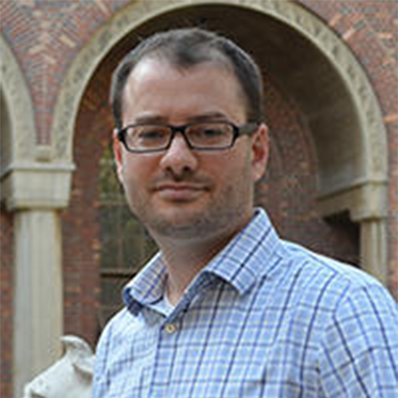
Dickman, Dion
Associate Professor of Biological Sciences
Synaptic development, function, and plasticity in Drosophila.


Goldsworthy, Ray
Clinical Associate Professor of Otolaryngology and Biomedical Engineering
Ray's research combines psychoacoustics, signal processing, and auditory rehabilitation towards improving hearing for the hearing impaired with emphasis on cochlear implant technology. Ray's research examines relationships between fundamental limits of auditory resolution with speech recognition. This line of research provides a foundation for quantifying auditory capacity, and sets the stage for systematically exploring signal processing solutions to enhance hearing for the impaired. Ray's signal processing research focuses on strategies that are inspired by the dynamic processes observed in healthy hearing. These strategies range from spatial beamformers modeled after binaural hearing to cochlear implant stimulation strategies inspired by auditory nerve physiology. Combining psychoacoustics and signal processing ultimately requires careful attention to auditory rehabilitation since cochlear implant and hearing aid users generally require dedicated time and training to learn how to use new information provided by enhanced signal processing solutions.

Herring, Bruce
Associate Professor of Biological Sciences
The Herring lab integrates in vivo calcium imaging, machine learning-enhanced behavioral analysis, and ex vivo brain slice electrophysiology to understand the development of ASD/ID and psychiatric disorders in the brain.

Hires, Samuel Andrew
Associate Professor of Biological Sciences
The Hires lab is investigating the basis of biological intelligence. Over the past decade we developed numerous imaging tools to record large-scale patterns of neural activity that are used by thousands of neuroscience labs. These have resulted in hundreds of publicly available datasets embedded with rich representations of neural activity. We are now developing analytical tools, using recent AI developments, to ultimately distill undiscovered principles of biological intelligence from these datasets.
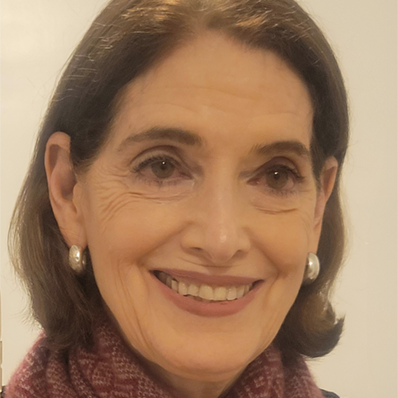
Hirsch, Judith A.
Gabilan Distinguished Professorship in Science and Engineering and Professor of Biological Sciences
Our laboratory studies the thalamus, the interface between neocortex and the sensory periphery. Thalamus was once regarded as a simple gatekeeper, passively relaying information during waking and shielding neocortex from disturbance during sleep, but this is an impoverished view. We explore how thalamus, itself, contributes to sensory integration. In particular, we study the structure of neural circuits in the visual part of thalamus, how these operate during vision and how they extract and recode information from the eye. Our work shows how thalamus might contribute to visual processing by, for example, sharpening the visual image and increasing the efficiency of the neural code. Because circuits in different parts of thalamus are similar, our work pertains to thalamic function in general.
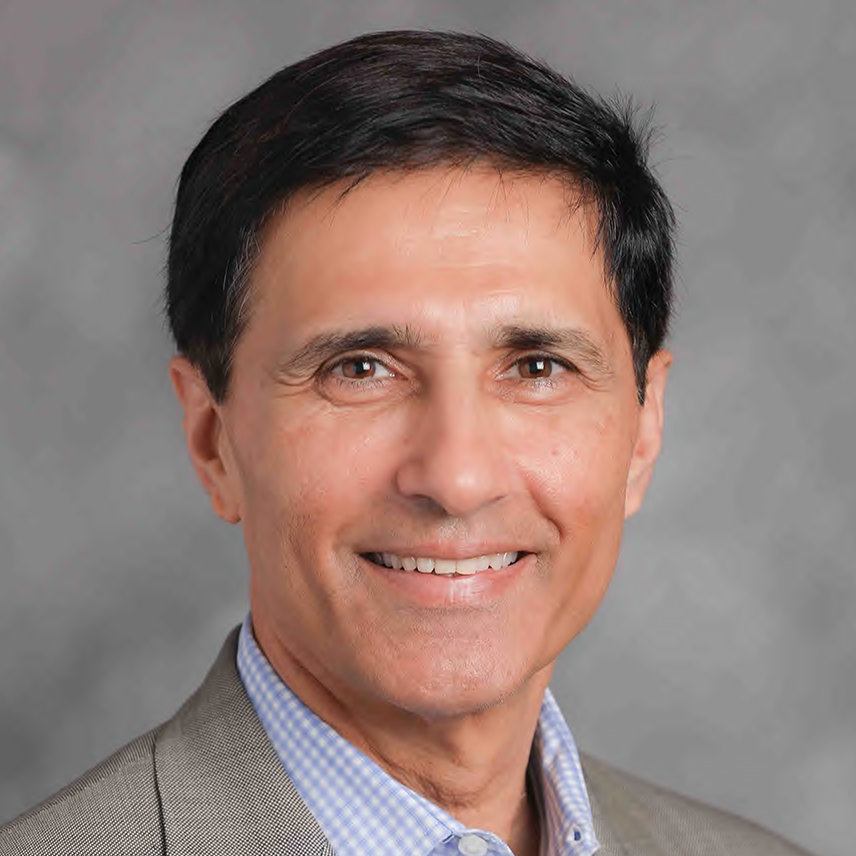
Humayun, Mark
Professor of Ophthalmology, Stem Cell Biology and Regenerative Medicine and Biomedical Engineering
Retinal research to restore vision using bioelectronics and stem cells