

Lyden, Patrick
Professor of Physiology and Neuroscience and Neurology
The Lyden lab has been funded by NIH, VA and AHA for over 30 years. The lab is focused on translational pre-clinical stroke modeling, pharmacology, and vascular biology. The lab has considerable experience with a variety of animal models; behavioral testing; histology; and cell biology. The lab was selected by NINDS to develop and manage the Stroke Preclinical Assessment Network (SPAN) as the Coordinating Center. Current projects include studies to determine the mechanisms of differential vulnerability in the neurovascular unit; effects of microglial activation on neuronal survival; and blood brain barrier disruption during stroke and mild traumatic brain injury.


Matho, Katherine
Assistant Professor of Pediatrics
How do developmental and genetic programs build brain circuits for complex behavior? My lab investigates this question by integrating developmental neuroscience, molecular genetics, and multi-scale circuit mapping to study cortical sensorimotor circuits underlying goal-directed actions and perception. Using interdisciplinary approaches, such as gene knockin mouse lines and single cell profiling, we examine how neuronal identity and connectivity emerge during development. Our goal is to uncover the molecular and developmental logic of circuit assembly in neurotypical development and how the key building blocks that make up the circuits—cell types—are disrupted in neurodevelopmental disorders. We hypothesize that a temporal patterning program during pregnancy specifies neuron subtype and wiring, shaping sensorimotor function in the mature brain.

Moore, Jeffrey
Assistant Professor of Biological Sciences
Many mammals sense and affect their environment predominantly through innate motor programs for exploration, social interaction, and ingestion; yet, little is known about the neuronal circuits that control these motor programs. Our lab uses molecular, systems, and computational neurobiological techniques to identify specific brainstem motor control modules and to determine how higher-order brain structures engage these modules for innate behaviors.
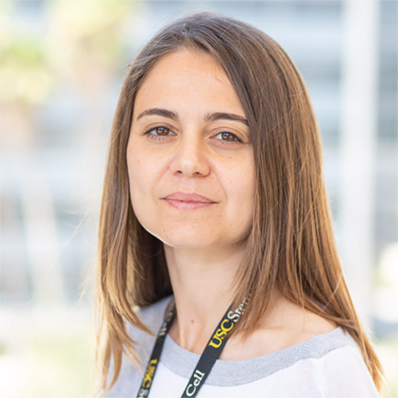
Quadrato, Giorgia
Associate Professor of Stem Cell Biology and Regenerative Medicine
The Quadrato lab focuses on understanding the cellular and molecular basis of human brain development and mental disorders. We seek to produce meaningful work that advances the fundamental knowledge of our field and provides new tools to do it. By combining emerging models of the human brain with single-cell -omics approaches, we aim to identify brain region and cell type-specific disease mechanisms and, above all, new treatments for neuropsychiatric disorders. To improve the physiological relevance of human pluripotent stem cell-derived organoids, our lab is leveraging interdisciplinary strategies and technologies aimed at tighter regulatory control of organoid development through bioengineering approaches, along with newer unbiased organoid analysis readouts.

Sieburth, Derek
Associate Professor of Physiology & Neuroscience
Our lab is interested in understanding how neuronal signal transduction pathways regulate neurotransmitter secretion and how this impacts the function of underlying neuronal circuits that control behavioral output.

Tabbaa, Manal
Research in the Tabbaa lab leverages genetically diverse mouse genetic reference panels to model individual differences in complex behaviors and susceptibility to a high-confidence autism risk gene. The goal of these projects is to better model genetically diverse populations in mice in order to address the challenging issue of developmental heterogeneity and genetic risk factor susceptibility in human neurodevelopmental disorders.