
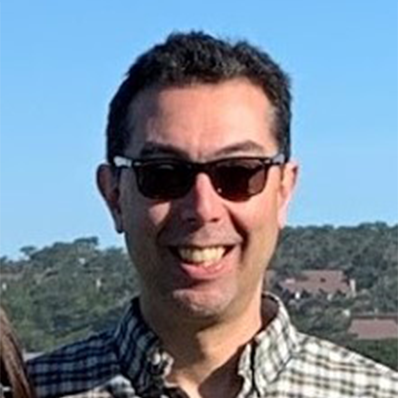
Oghalai, John
Our research is designed to better understand the fundamental changes in the inner ear that underlie progressive hearing loss and to develop novel techniques to treat this problem before it leads to a severe disability. We strive to understand the biological mechanisms of hearing loss and then translate this knowledge to directly and rapidly improve the care of patients with hearing loss.

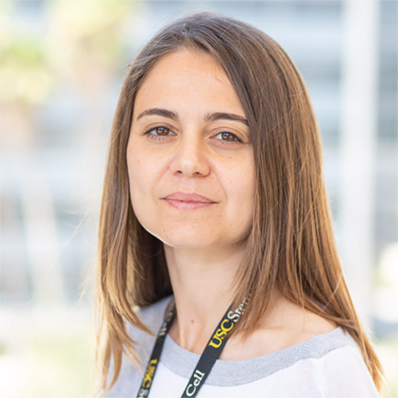
Quadrato, Giorgia
Associate Professor of Stem Cell Biology and Regenerative Medicine
The Quadrato lab focuses on understanding the cellular and molecular basis of human brain development and mental disorders. We seek to produce meaningful work that advances the fundamental knowledge of our field and provides new tools to do it. By combining emerging models of the human brain with single-cell -omics approaches, we aim to identify brain region and cell type-specific disease mechanisms and, above all, new treatments for neuropsychiatric disorders. To improve the physiological relevance of human pluripotent stem cell-derived organoids, our lab is leveraging interdisciplinary strategies and technologies aimed at tighter regulatory control of organoid development through bioengineering approaches, along with newer unbiased organoid analysis readouts.

Schwartzman, Jessica
Assistant Professor of Clinical Pediatrics
The Training and Research to Empower NeuroDiversity (TREND) Lab uses multi-method approaches, including electroencephalogram (EEG), behavioral observation and clinical interviews to study risk and protective factors for depression, suicide, and other mental health outcomes in youth with autism and other neurodivergent conditions. We also partner with autistic and other neurodivergent people to adapt and design treatments for the individual and family. The TREND Lab focuses on characterizing and treating adverse mental health outcomes in youth with autism and other neurodivergent conditions.

Song, Dong
Associate Professor of Neurological Surgery and of Biomedical Engineering
Dr. Dong Song is an Associate Professor of Neurological Surgery and Biomedical Engineering and Director of the Neural Modeling and Interface Laboratory at the University of Southern California (USC). Dr. Song received his B.S. degree in Biophysics from the University of Science and Technology of China in 1994 and his Ph.D. degree in Biomedical Engineering from USC in 2004. His research aims to develop biomimetic devices that can be used to treat neurological disorders. Specifically, his group uses a combined experimental and computational strategy to (1) understand how brain regions such as the hippocampus perform cognitive functions, (2) develop next-generation modeling and neural interface methodologies to investigate brain functions during naturalistic behaviors, and (3) build cortical prostheses that can restore and enhance cognitive functions lost in diseases or injuries. He received the James H. Zumberge Individual Award at USC in 2008, the Outstanding Paper Award of IEEE Transactions on Neural Systems and Rehabilitation Engineering in 2013, and the Society for Brain Mapping and Therapeutics Young Investigator Award in 2018. Dr. Song has published over 190 peer-reviewed journal articles, book chapters, and conference papers. He is a member of the Biomedical Engineering Society, IEEE, Society for Neuroscience, and National Academy of Inventors. Dr. Song’s research has been supported by DARPA, NSF, and NIH.

Tabbaa, Manal
Research in the Tabbaa lab leverages genetically diverse mouse genetic reference panels to model individual differences in complex behaviors and susceptibility to a high-confidence autism risk gene. The goal of these projects is to better model genetically diverse populations in mice in order to address the challenging issue of developmental heterogeneity and genetic risk factor susceptibility in human neurodevelopmental disorders.

Tao, Huizhong W.
Professor of Physiology and Neuroscience
My lab studies how the mouse brain processes visual information and transforms it into behavior. Our research focuses on identifying the neural circuits involved in visual perception and how these circuits drive visually guided actions. We use a combination of techniques—including electrophysiology to record neural activity, microendoscopic calcium imaging to monitor populations of neurons in freely moving animals, and both optogenetics and chemogenetics to precisely manipulate specific circuit components. By integrating these approaches, we aim to understand how visual signals are encoded, transmitted, and used to guide behavior at the level of individual neurons and larger networks.