

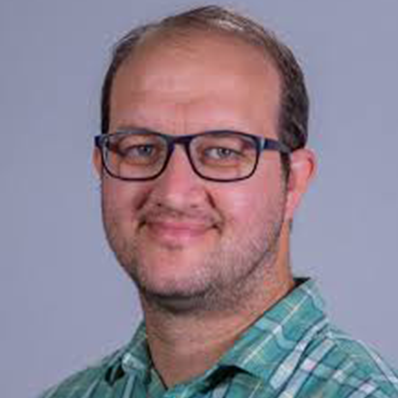
Moore, Jeffrey
Assistant Professor of Biological Sciences
Many mammals sense and affect their environment predominantly through innate motor programs for exploration, social interaction, and ingestion; yet, little is known about the neuronal circuits that control these motor programs. Our lab uses molecular, systems, and computational neurobiological techniques to identify specific brainstem motor control modules and to determine how higher-order brain structures engage these modules for innate behaviors.

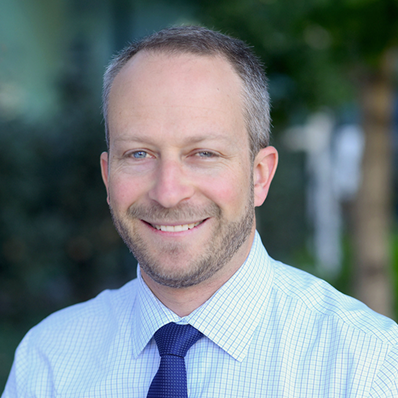
Nagiel, Aaron
Assistant Professor of Clinical Ophthalmology
The development and maintenance of specific synaptic connections between retinal neurons is critical to its function. Within the last 10 years it has become possible to grow 3-dimensional, multi-layered retinal organoids derived from human stem cells. This advance permits the study of human retinal development and the establishment of synaptic connectivity. Our goal is to elucidate mechanisms underlying synapse formation and specificity in the first synapse of the human visual system. Access to CRISPR-engineered organoids allows us to understand this process in the disease state.

Oghalai, John
Our research is designed to better understand the fundamental changes in the inner ear that underlie progressive hearing loss and to develop novel techniques to treat this problem before it leads to a severe disability. We strive to understand the biological mechanisms of hearing loss and then translate this knowledge to directly and rapidly improve the care of patients with hearing loss.
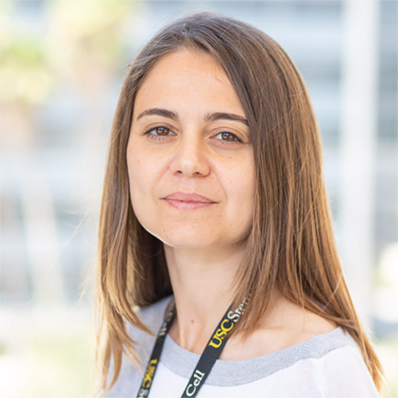
Quadrato, Giorgia
Associate Professor of Stem Cell Biology and Regenerative Medicine
The Quadrato lab focuses on understanding the cellular and molecular basis of human brain development and mental disorders. We seek to produce meaningful work that advances the fundamental knowledge of our field and provides new tools to do it. By combining emerging models of the human brain with single-cell -omics approaches, we aim to identify brain region and cell type-specific disease mechanisms and, above all, new treatments for neuropsychiatric disorders. To improve the physiological relevance of human pluripotent stem cell-derived organoids, our lab is leveraging interdisciplinary strategies and technologies aimed at tighter regulatory control of organoid development through bioengineering approaches, along with newer unbiased organoid analysis readouts.

Schier, Lindsey
Associate Professor of Biological Sciences
The Schier lab seeks to understand how the chemical constituents of foods and fluids are sensed, how these oral and postoral signals are processed in the brain and channeled into the behavioral outputs that subserve energy balance.

Sieburth, Derek
Associate Professor of Physiology & Neuroscience
Our lab is interested in understanding how neuronal signal transduction pathways regulate neurotransmitter secretion and how this impacts the function of underlying neuronal circuits that control behavioral output.