

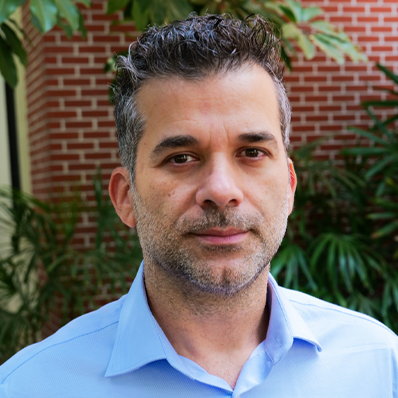
Christopoulos, Vasileios
Assistant Professor of Biomedical Engineering
Prof. Christopoulos' research focuses on understanding the neural mechanisms underlying higher-order cognitive functions, such as decision-making, motor learning, and motor control. In recent years, he has expanded his research to include clinical studies on patients with brain and spinal cord injuries. His work encompasses intracortical Brain-Machine Interface research in individuals with tetraplegia and the use of functional ultrasound imaging in patients undergoing surgery for brain and spinal cord disorders. His innovative research aims to bridge the gap between basic neuroscience and clinical applications, contributing to advancements in neurotechnology and neurorehabilitation.


Coba, Marcelo
Neurodevelopmental neurodegenerative and psychiatric disease are complex brain disorders, and a multitude of genes have been described to contribute to their pathology with different penetrance. Human genetic studies have discovered many genes associated with disease susceptibility that are usually described as risk factors. For each of these disorders, synaptic proteins have been implicated, in particular those involved in synaptic plasticity and protein complexes associated to the post-synaptic density (PSD). Despite these discoveries, there has been a gap in understanding the underlying mechanisms that contribute to cellular dysfunction in these disorders. Our long-term goal is to determine how candidate risk factors are functionally integrated and how mutations affect their function, not individually, but in developmental signaling networks.


Coricelli, Giorgio
Professor of Economics and Psychology
We study human behaviors emerging from the interplay of cognitive and emotional systems. Our research agenda includes two main projects. The first one concerns the role of emotions in decision making, and the second is aimed at investigating the relational complexity in social interaction. Our objective is to apply robust methods and findings from behavioral decision theory to study the brain structures that contribute to forming judgments and decisions, both in an individual and a social context.

Eich, Teal
Associate Professor of Gerontology
My research centers on understanding sex differences in the cognitive and neural mechanisms underlying learning and memory changes in healthy and pathological aging, with a particular focus on Alzheimer’s disease. My lab uses a combination of cognitive, biobehavioral (biomarkers, endocrine profiles), and neuroimaging (structural, spectroscopic, and functional) to understand memory and executive function in normal aging, and seeks to translate these empirical and theoretical findings to model cognitive disorders in psychopathologic and neurodegenerative diseases, where high level cognitive failures can be particularly deleterious both for the individual and society at large.

Han, S.Duke
Professor of Psychology and Family Medicine
The Han Research Laboratory is dedicated to improving the health, wellbeing, and independence of adults living into old age. We are interested in investigating the diverse factors and neurobiological mechanisms that impact cognition and decision making across the lifespan using multidisciplinary approaches informed by the fields of neuropsychology, cognitive and systems neuroscience, epidemiology, genetics, and behavioral economics.

Hayes-Larson, Eleanor
Assistant Professor of Gerontology
Eleanor Hayes-Larson is an epidemiologist whose research program integrates social, psychiatric, and neuroepidemiology with advanced statistical methods to understand drivers of cognitive decline and dementia incidence and disparities. Her work takes a lifecourse perspective to examine psychosocial determinants of Alzheimer’s disease and related dementias in diverse populations, with an emphasis on groups historically underrepresented in research. A main line of her research seeks to evaluate the impact of traumatic stress across the lifecourse on cognitive decline, dementia, and neuroimaging biomarkers. In addition, she has a line of methodological research, including both statistical simulation studies and empirical data analysis, that focuses on improving statistical tools for causal inference and generalizability of findings in cognitive aging research.