

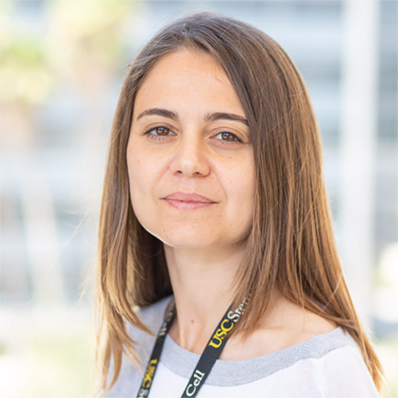
Quadrato, Giorgia
Associate Professor of Stem Cell Biology and Regenerative Medicine
The Quadrato lab focuses on understanding the cellular and molecular basis of human brain development and mental disorders. We seek to produce meaningful work that advances the fundamental knowledge of our field and provides new tools to do it. By combining emerging models of the human brain with single-cell -omics approaches, we aim to identify brain region and cell type-specific disease mechanisms and, above all, new treatments for neuropsychiatric disorders. To improve the physiological relevance of human pluripotent stem cell-derived organoids, our lab is leveraging interdisciplinary strategies and technologies aimed at tighter regulatory control of organoid development through bioengineering approaches, along with newer unbiased organoid analysis readouts.


Rissman, Robert
Professor of Physiology and Neuroscience
Dr. Rissman is Professor Physiology and Neuroscience and founding Director of the Neuroscience Translational Research Division (NTRD) of USC’s Alzheimer’s Therapeutic Research Institute in San Diego. Dr. Rissman’s basic science research goal is to identify and validate plasma biomarkers for Alzheimer’s Disease and Related Disorders (ADRD) to better understand mechanisms of neurodegeneration and to streamline clinical trials recruitment. Work from Dr. Rissman’s lab has led to the validation of plasma biomarkers that predict AD brain neuropathology and progression of dementia. Also, through analysis of plasma-derived extracellular vesicles, his group was the first to demonstrate that TDP-43 protein within astrocyte extracellular vesicles can identify Limbic-predominant age-related TDP-43 encephalopathy (LATE).
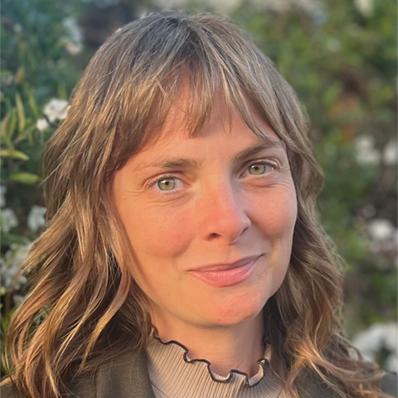
Schier, Lindsey
Associate Professor of Biological Sciences
The Schier lab seeks to understand how the chemical constituents of foods and fluids are sensed, how these oral and postoral signals are processed in the brain and channeled into the behavioral outputs that subserve energy balance.

Tabbaa, Manal
Assistant Professor of Research Pediatrics
Research in the Tabbaa lab leverages genetically diverse mouse genetic reference panels to model individual differences in complex behaviors and susceptibility to a high-confidence autism risk gene. The goal of these projects is to better model genetically diverse populations in mice in order to address the challenging issue of developmental heterogeneity and genetic risk factor susceptibility in human neurodevelopmental disorders.

Tao, Huizhong W.
Professor of Physiology and Neuroscience
My lab studies how the mouse brain processes visual information and transforms it into behavior. Our research focuses on identifying the neural circuits involved in visual perception and how these circuits drive visually guided actions. We use a combination of techniques—including electrophysiology to record neural activity, microendoscopic calcium imaging to monitor populations of neurons in freely moving animals, and both optogenetics and chemogenetics to precisely manipulate specific circuit components. By integrating these approaches, we aim to understand how visual signals are encoded, transmitted, and used to guide behavior at the level of individual neurons and larger networks.

Wang, Lu
Assistant Professor of Dentistry
Our lab aims to push the boundary of our understanding of human brain in development and related disorders with discoveries focused on non-neuronal cells, environmental stress, and genetic mutations, leveraging the stem cell-based organoid/PCCO-assembled model in combination with the state-of-art genetic and genomic (single cell level) strategies to expand our knowledge of the cell-cell communication, fate dynamics, and niche homeostatic of the non-neuronal cells (astrocytes and pericytes) in health, and emergency rescue when they are under stress or in disease. Ultimately, our collective efforts, alongside those of others in the field, will pave the way for groundbreaking interventions in the realm of neurological disease.